 PublicationPublication
A practical field guide to writing better AI prompts for healthcare.
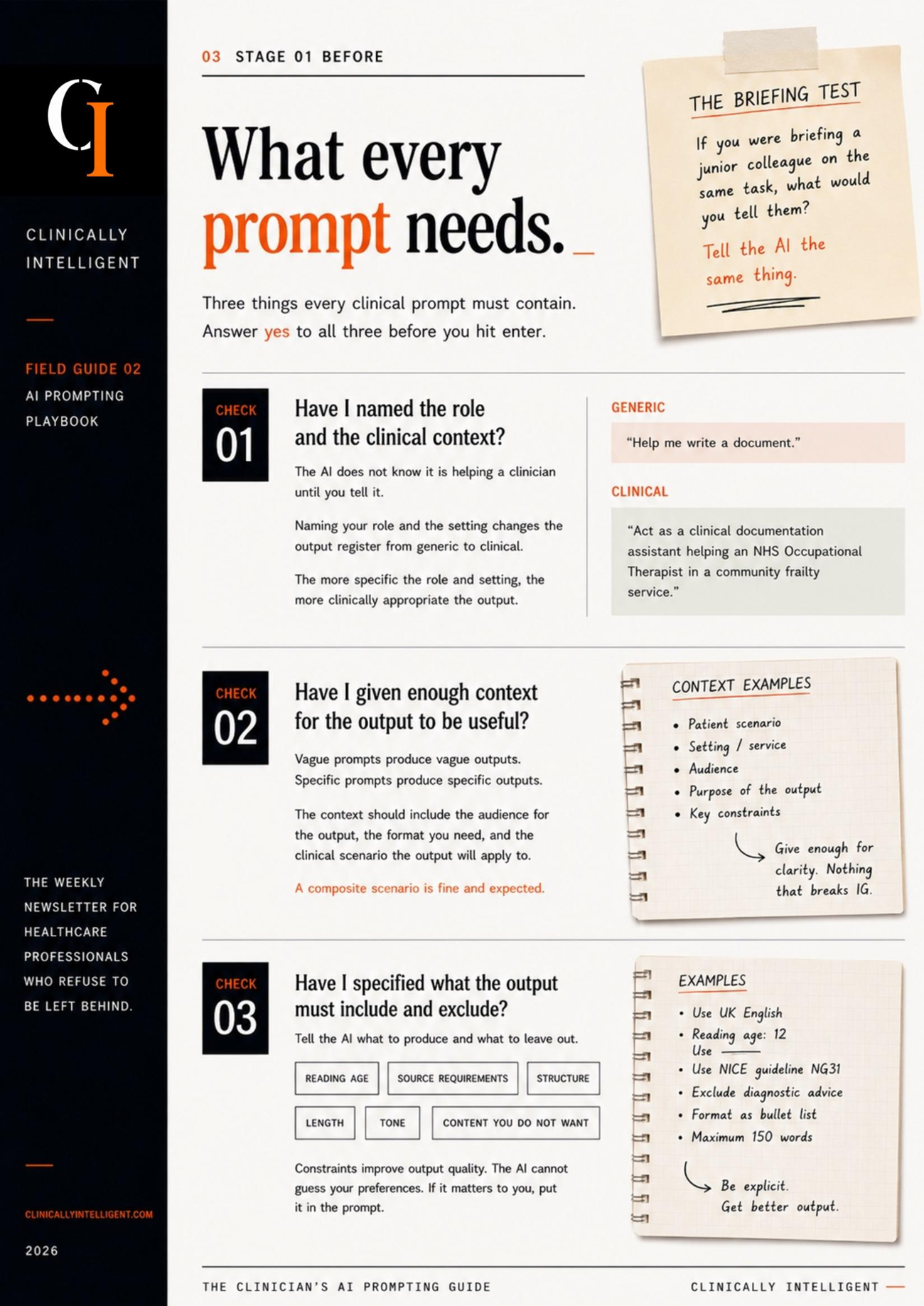
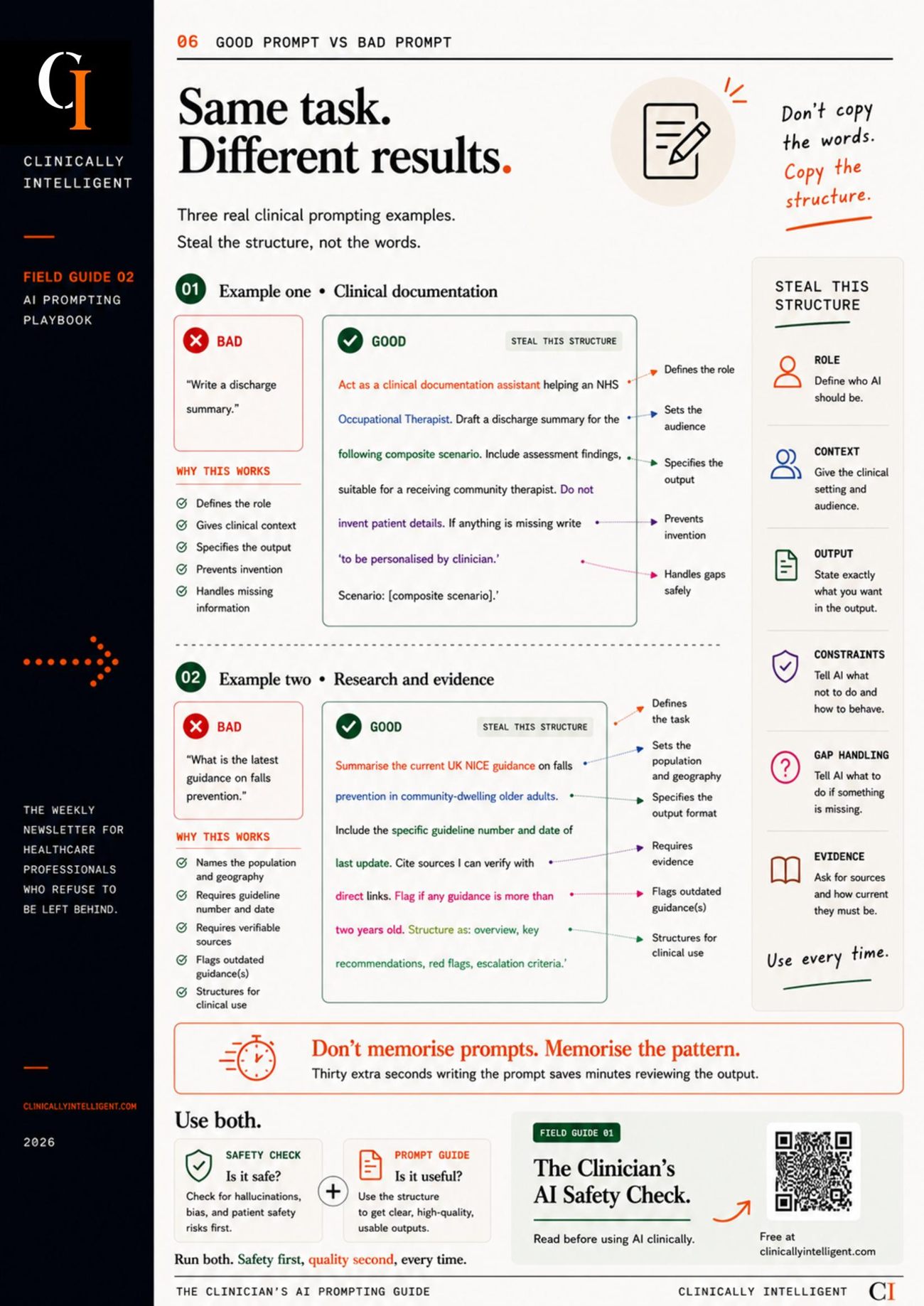
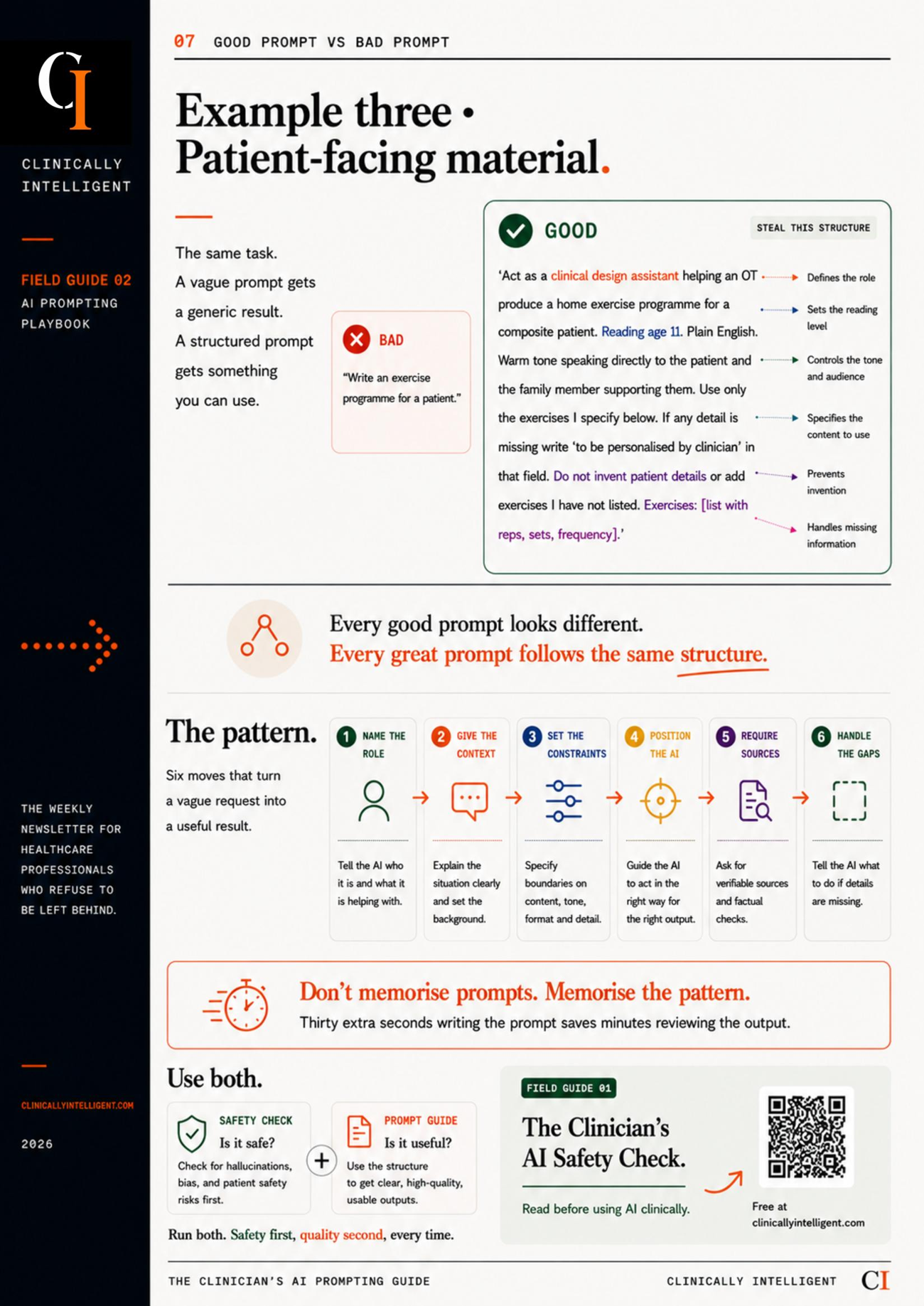
Ten pages. One repeatable structure. Steal the structure, not the words.
Numbered checks to run before you hit enter, including the Briefing Test: if you were briefing a junior colleague on the same task, what would you tell them?
What AI should draft, and what stays with you. The clinical judgement stays with you. Every time.
Three real clinical prompting examples. Bad prompt beside good, annotated line by line. Same task. Different results.
The four information governance principles every prompt in the guide assumes. The technology is new. Your responsibilities aren't.
Spending too long rewriting the same prompt.
Using AI at work without training or guidance.
Wanting outputs that fit real practice, not generic ones.
Wanting to work faster without lowering the standard of care.
Doctors, nurses, allied health professionals, pharmacists, and the teams around them.
Many healthcare professionals have tried AI and found it unreliable. They ask vague questions. They rewrite the same prompt repeatedly. They blame the model. Usually, the model is capable. The instructions are just incomplete.
When prompts fail, professionals conclude that AI is not ready for clinical work. It becomes the tool they tried once and never returned to. The gap between what AI can do and what it does for you sits almost entirely in the prompt.
Don't memorise prompts. Memorise the pattern.
You'll also receive Clinically Intelligent. A weekly newsletter on practical AI for NHS clinicians. Free to read. Unsubscribe any time.
Clinically Intelligent lands in your inbox on Wednesday. In the meantime, the Field Guide is yours.
New to AI at work? Start with the safety side first.
Field Guide 01 · The Clinician's AI Safety Check →